beginquest.in

Uncategorized

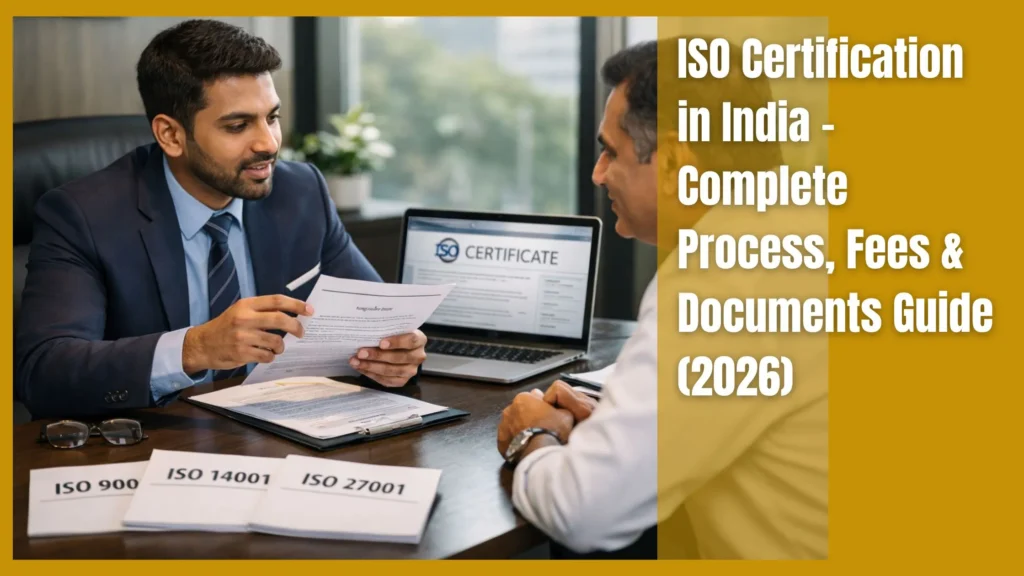
ISO certification consultant explaining ISO 9001, ISO 14001 and ISO 27001 registration process to Indian business owner in modern corporate office, laptop showing ISO certificate draft.
Uncategorized

ISO Certification in India – Complete Process, Fees & Documents Guide (2026)

ISO Certification in India – Complete Process, Fees & Documents Guide (2026) If you want to build strong business credibility, qualify for government tenders, and gain customer trust, ISO Certification can significantly strengthen your company’s position in the market. In today’s competitive environment, many buyers and government departments prefer working with ISO-certified companies because it shows structured systems, quality control, and compliance standards. This guide explains everything you need to know about ISO certification in India — including process, cost, documents required, and benefits. If you want to increase business credibility, win government tenders, or build customer trust, ISO Certification is a powerful step. Many businesses search for: ISO Certification online ISO registration process ISO certificate cost in India How to get ISO certification for company If you want expert assistance, 👉 Contact Us for ISO Certification Services What is ISO Certification? ISO Certification is an internationally recognized standard that confirms a business follows defined management systems for quality, safety, efficiency, or security. These standards are developed by the International Organization for Standardization (ISO), an independent global body that sets compliance benchmarks across industries. Having ISO certification shows that your business operates with proper documentation, systematic processes, and quality monitoring. Types of ISO Certification in India High-search keyword: Types of ISO certification ISO 9001 – Quality Management System Focuses on customer satisfaction and quality control. ISO 14001 – Environmental Management For companies focusing on environmental compliance. ISO 45001 – Occupational Health & Safety For workplace safety standards. ISO 27001 – Information Security Management For IT companies and data protection. ISO 22000 – Food Safety Management For food manufacturers & restaurants. Who Needs ISO Certification? Search term: Who can apply for ISO certification? ISO can be applied by: Private Limited Companies LLP Partnership Firms Sole Proprietorship Startups Manufacturers Service Providers Documents Required for ISO Certification To apply for ISO certification in India, you typically need: Company PAN Card Aadhaar Card of owner/director Business registration proof (GST / MSME / Shop Act) Company letterhead Address proof of business premises Scope of business activities Organizational structure details ISO Certification Process in India (Step-by-Step) Search term: ISO certification process in India Step 1: Select ISO standard Choose relevant ISO type (9001 / 14001 / 27001 etc.) Step 2: Documentation Prepare quality manual & compliance documents. Step 3: Application Filing Apply through accredited certification body. Step 4: Audit Stage 1 & Stage 2 audit conducted. Step 5: Certificate Issued ISO certificate valid for 3 years. Processing time: 7–20 working days (depends on type). 👉 Apply for ISO Certification Online ISO Certification Fees in India The cost depends on: Type of ISO standard Business size Number of employees Scope of operations Certification body selected Generally, ISO certification cost in India ranges between ₹4,000 to ₹25,000. Larger organizations may incur higher costs due to complex audit requirements. Benefits of ISO Certification ✔ Improves brand trust✔ Required for government tenders✔ Helps in export business✔ Increases operational efficiency✔ Better marketing advantage✔ International recognition ISO Certification for Government Tender Is ISO certification mandatory for tender? Many government and PSU tenders require ISO 9001 certification as eligibility criteria. Without ISO, you may be disqualified from bidding. ISO Certification Validity & Renewal ISO certificate validity: 3 years Surveillance audit required annually. Keyword target: ISO certificate renewal process About ISO Standards Authority & Official Verification ISO standards are developed and maintained by the International Organization for Standardization, an independent international organization that creates globally accepted quality, safety, and compliance standards for businesses across 160+ countries. If you want to understand how ISO standards are structured, verify global guidelines, or check official information about specific ISO frameworks (such as ISO 9001, ISO 14001, or ISO 27001), you can visit the official ISO website. This ensures transparency and helps businesses understand the international credibility behind ISO certification. 🔗 Visit Official ISO Website:https://www.iso.org Conclusion ISO certification is not just a certificate — it is a structured system that improves business performance, increases credibility, and opens new growth opportunities. Whether you are a startup, manufacturer, service provider, or exporter, obtaining ISO certification can strengthen your business reputation and competitive advantage in 2026 and beyond.

FSSAI Registration 2026 in India – food entrepreneur working in hygienic kitchen with packaged products and compliance documents
Uncategorized

FSSAI Registration in 2026: Complete Guide for Food Businesses in India

FSSAI Registration in 2026: Complete Guide for Food Businesses in India If you are starting a food-related business in 2026, obtaining FSSAI registration is one of the most important legal steps. Whether you run a home-based food brand, cloud kitchen, restaurant, food manufacturing unit, or packaged food business, FSSAI registration ensures that your products comply with Indian food safety laws. This guide explains the FSSAI registration process, required documents, eligibility criteria, fees structure, and common mistakes in a simple and practical manner. What is FSSAI Registration? FSSAI registration is issued by the Food Safety and Standards Authority of India under the Ministry of Health & Family Welfare. It ensures that food businesses follow safety standards and maintain hygiene. Every Food Business Operator (FBO) in India must obtain either: Basic Registration State License Central License depending on turnover and business size. For official guidelines, you can visit the FSSAI official portal:https://foscos.fssai.gov.in Who Needs FSSAI Registration in 2026? You must apply if you are involved in: Home-based food business (like achar, bakery, tiffin service) Food manufacturing Restaurant or café Food delivery business Online food sellers (Amazon, Flipkart, Swiggy, Zomato) Food import/export Even small food startups must obtain at least basic FSSAI registration. If you are also planning to register your business under MSME, you can read our detailed guide on MSME Registration in Lucknow here:👉 https://beginquest.in/msme-udyam-registration/ Types of FSSAI License (2026) 1️⃣ Basic FSSAI Registration For businesses with turnover up to ₹12 lakh per year. 2️⃣ State FSSAI License For turnover between ₹12 lakh and ₹20 crore. 3️⃣ Central FSSAI License For turnover above ₹20 crore or businesses operating in multiple states. Documents Required for FSSAI Registration The documentation requirement depends on the license type but generally includes: Aadhaar card PAN card Business address proof Passport size photo Food product details Declaration form Unlike some other registrations, FSSAI may require inspection depending on the category. To understand the official FSSAI registration process, please watch this official video. https://youtu.be/8El8hlLAKqg?si=NSPDS12Y-9e9Ov1Z Step-by-Step FSSAI Registration Process (2026) Visit the official FSSAI portal Select your business category Fill business details Upload required documents Pay government fee Submit application Receive FSSAI certificate You can verify regulations and food safety standards at the official government website:https://www.fssai.gov.in For taxation compliance related to food businesses, refer to thehttps://www.incometax.gov.in portal. Benefits of FSSAI Registration Legal protection for food business Builds customer trust Required for online marketplaces Helps in government tenders Expands business credibility Avoids heavy penalties If you are also applying for GST for your food business, check our complete guide on:👉 https://beginquest.in/gst-registration/ Common Mistakes to Avoid Applying under the wrong license category Entering incorrect turnover details Uploading unclear documents Ignoring renewal dates Using mismatched business information Always double-check details before submission. Why FSSAI is Important in 2026 Food safety compliance has become stricter in 2026. Online food platforms now require valid FSSAI license numbers before onboarding sellers. Without registration, your food products may face legal penalties or removal from marketplaces. Need Help with FSSAI Registration? If you want to apply for FSSAI registration,👉 Click here to start your FSSAI Registration process https://beginquest.in/fssai-registration/   If you need expert assistance in FSSAI documentation and compliance,👉 Connect with our FSSAI registration expert team  Apply for FSSAI Registration Online   Conclusion FSSAI registration in 2026 is not just a legal requirement but a foundation for building a trusted food brand in India. Whether you are running a small home kitchen or planning large-scale food manufacturing, getting properly registered ensures smooth operations and long-term growth. Make sure you apply under the correct category and keep your documents ready. With proper compliance, your food business can grow confidently and legally.

MSME Registration in Lucknow 2025 complete guide for Udyam registration process, benefits and documents required for small businesses in Uttar Pradesh
Uncategorized

MSME Registration in Lucknow: Complete Guide 2025 (Udyam Registration Process)

MSME Registration in Lucknow: Complete Guide 2025 (Udyam Registration Process) Learn everything about MSME Registration in Lucknow in this complete 2025 guide. Understand the Udyam registration process, documents required, benefits, and common mistakes for businesses in India. Starting or running a small business in Lucknow—especially in areas like Gomti Nagar—comes with many opportunities. One of the most important steps for any small or medium business is MSME Registration in Lucknow, officially known as Udyam Registration. This guide explains the Udyam registration process, eligibility, documents, benefits, and common mistakes in a simple and beginner-friendly way. Whether you are a freelancer, shop owner, startup founder, or service provider, this article will help you understand everything clearly. What is MSME Registration? MSME registration in India is a government recognition given to Micro, Small, and Medium Enterprises under the Ministry of MSME. Since 2020, MSME registration is done through the Udyam portal, and the certificate issued is called the Udyam Registration Certificate. Once registered, your business is officially considered MSME registered, which makes it eligible for various government benefits and schemes. MSME Registration in Lucknow (Why It Matters Locally) Lucknow is growing fast as a business hub, especially in areas like Gomti Nagar, Alambagh, Aliganj, and Indira Nagar. MSME registration helps local businesses: Get easier access to bank loans Apply for government tenders Receive subsidies and incentives Build trust with customers and vendors For service-based businesses, startups, home-based businesses, and small shops in Lucknow, Udyam registration is highly beneficial. MSME Classification (As Per Latest Rules) MSME classification is based on investment and annual turnover: Micro Enterprise Investment: Up to ₹1 crore Turnover: Up to ₹5 crore Small Enterprise Investment: Up to ₹10 crore Turnover: Up to ₹50 crore Medium Enterprise Investment: Up to ₹50 crore Turnover: Up to ₹250 crore This classification applies to msme registration in India across all states, including Uttar Pradesh. Step-by-Step Udyam Registration Process (2025) The Udyam online registration process is fully digital and paperless. Step 1: Visit the Udyam Portal Go to the official Udyam portal. Step 2: Enter Aadhaar Details Aadhaar of the proprietor (for sole proprietorship) Aadhaar of partner/director (for firms or companies) Step 3: Business Details Fill in: Business name Type of organization Address (Lucknow / Gomti Nagar, if applicable) Bank details Step 4: PAN Verification PAN is mandatory. Business data is automatically fetched from government databases. Step 5: Activity & NIC Code Select: Manufacturing or Service Relevant NIC codes Step 6: Submit & Get Certificate After submission, you receive a Udyam Registration Number (URN) and certificate instantly. Official Government Resources for MSME Registration For accurate and official information, refer to the following government sources: Official Udyam Registration Portal – https://udyamregistration.gov.in Ministry of MSME – https://msme.gov.in Income Tax Department – https://www.incometax.gov.in   Documents Required for MSME Registration One of the best things about MSME registration in Lucknow is minimal documentation. You only need: Aadhaar card PAN card Bank account details Business address Mobile number linked with Aadhaar No physical documents or uploads are required. Benefits of MSME Registration An MSME registered business enjoys several advantages: Lower interest rates on loans Priority sector lending from banks Protection against delayed payments Subsidies on electricity and patents Easier approval for licenses and registrations Eligibility for government schemes These benefits apply equally to businesses in Lucknow and Gomti Nagar. Common Mistakes to Avoid During Udyam Registration Many applicants make small errors that cause issues later. Avoid these mistakes: Entering incorrect Aadhaar or PAN details Choosing the wrong business activity Selecting incorrect NIC codes Using personal details inconsistently Not updating information when business grows Always double-check details before submitting. Conclusion MSME Registration in Lucknow is a simple yet powerful step for any small or medium business in 2025. Through the Udyam registration process, businesses in areas like Gomti Nagar can gain official recognition, financial benefits, and long-term growth support. The process is online, free, and quick. If you are planning to grow your business in India, getting MSME registered is a smart and future-ready decision.

business consultant in Lucknow guiding project loan eligibility
Uncategorized

Project Loan Eligibility Guide by Business Consultant in Lucknow: Are You Ready to Apply?

Project Loan Eligibility Guide by Business Consultant in Lucknow: Are You Ready to Apply? Are you dreaming of launching a new project but unsure if you can secure the funding to bring it to life? You’re not alone! Navigating the world of project loans can feel like decoding a complex puzzle, with eligibility requirements that often seem daunting. But fear not—this blog post is your ultimate guide to understanding what it takes to qualify for those much-needed funds. Whether you’re an aspiring entrepreneur, a seasoned business owner, or simply curious about financing options, we’ll break down the essential criteria and provide insider tips on how to strengthen your application. Get ready to unlock the doors to financial support and turn your vision into reality! If you are planning to apply for a project loan, preparing a strong project report for bank loan approval is the first and most important step. For a detailed step-by-step guide, you can read our complete article here: 👉 Project Report for Loan Preparationhttps://yourwebsite.com/project-report-for-loan As per official banking norms, lenders assess borrower risk based on financial stability and repayment capacity. You can review the official guidelines here: 👉 RBI Lending Guidelineshttps://www.rbi.org.in/ Introduction to Project Loans Project loans can be a game-changer for entrepreneurs looking to bring their visions to life. Whether you’re planning an expansion, launching a new product, or investing in infrastructure, understanding project loan finance is crucial. But before you dive into the application process, it’s important to know if you meet the eligibility criteria. Navigating through the maze of requirements can feel overwhelming. What factors truly determine your qualification? The last thing you want is to waste time and resources on documentation that doesn’t align with lender expectations. Knowing what lenders are looking for can give you an edge. This guide will walk you through everything from essential criteria to common pitfalls in the application process. With insights tailored specifically for those seeking project loans, you’ll be better equipped to secure funding and turn your ideas into reality. Let’s explore what makes a strong candidate for project financing! 🎥 Complete Project Loan Documentation Guide (Watch Before Applying) https://www.youtube.com/watch?v=TuNZ7B6d8f0&t=37s Importance of Eligibility Criteria Eligibility criteria serve as the foundation for project loan finance. They help lenders assess the risk associated with a potential borrower.  When you meet specific eligibility requirements, it signals financial responsibility and stability. This can make all the difference in securing funds for your project.  Furthermore, these criteria streamline the borrowing process. Both lenders and borrowers benefit from clear guidelines that outline expectations. Understanding what makes you eligible allows you to prepare accordingly. It empowers you to present yourself as a strong candidate in front of financial institutions. Ultimately, meeting eligibility standards opens doors to better financing options and terms that suit your project’s needs. Factors That Determine Eligibility for a Project Loan When applying for project loan finance, several key factors influence your eligibility. Lenders often assess your credit score as an initial benchmark. A higher score can significantly enhance your chances. Your business’s financial health also plays a crucial role. This includes reviewing income statements, cash flow projections, and existing debts. Lenders want to see that you can manage repayments comfortably. Experience in the industry is another determining factor. Demonstrating a solid track record of successful projects reassures lenders about your capability to execute new ones. Moreover, the purpose of the loan matters too. Clearly outlining how you plan to utilize funds helps establish credibility with lenders. Finally, collateral may be required depending on the amount sought and risk assessment associated with the project. This provides security for lenders should repayment issues arise down the line. The Documentation Process When applying for project loan finance, the documentation process can feel daunting. However, it’s a crucial step that cannot be overlooked. Proper documentation not only supports your application but also enhances your credibility. You will need to gather various documents that verify your business’s financial health. This often includes balance sheets, profit and loss statements, and tax returns from previous years. These figures help lenders assess risk effectively. Additionally, having a detailed project proposal is essential. It should outline objectives, timelines, and budget estimates related to the project you wish to fund. Don’t forget personal identification documents such as government-issued IDs or business licenses. These affirm your identity as an applicant. Engaging with a knowledgeable business consultant in Lucknow may streamline this stage significantly—ensuring you present the right information efficiently. If you need professional assistance with loan documentation and approval, our expert team can guide you through the entire process: 👉 Business Consultant in Lucknow – Complete Project Loan Assistancehttps://yourwebsite.com/business-consultant-lucknow Tips for Improving Your Eligibility Improving your eligibility for a project loan can significantly enhance your chances of approval. Start by ensuring that your credit score is in good shape. Lenders often use this as a primary factor when assessing risk. Next, maintain stable income levels. A consistent revenue stream shows lenders that you can manage repayments effectively. Documenting all sources of income adds to your credibility. Another key aspect is having a well-structured business plan. This should outline the purpose of the loan and how it will benefit your project financially. Additionally, build relationships with financial institutions or business consultants in Lucknow. Their insights and guidance can be invaluable in navigating the application process. Lastly, ensure all required documentation for project finance is organized and readily available. Being prepared makes the application smoother and demonstrates professionalism to potential lenders. Common Mistakes to Avoid Many applicants stumble in the loan application process due to common pitfalls. One major mistake is not thoroughly researching lenders. Different institutions have varied eligibility criteria and terms, so it’s crucial to find one that aligns with your project needs. Another frequent error is underestimating the importance of a strong business plan. A well-prepared plan showcases your vision and demonstrates feasibility, which can significantly impact approval chances. Incomplete documentation often leads to delays or denials. Ensure all necessary documents are prepared ahead of time, such

Uncategorized

GST Registration in Lucknow (LKO): Process, Benefits & Required Documents

GST Registration in Lucknow (LKO): Process, Benefits & Required Documents Introduction GST Registration in Lucknow (LKO) has become an essential compliance requirement for businesses operating in Uttar Pradesh. Whether you are a small trader, service provider, startup, freelancer, or an established company, registering under Goods and Services Tax (GST) helps you operate legally and grow your business with credibility. GST has replaced multiple indirect taxes with a single unified tax system, making taxation simpler and more transparent. This blog explains what GST registration is, who needs it, its benefits, the registration process in Lucknow, and the complete list of required documents. What is GST? GST (Goods and Services Tax) is an indirect tax levied on the supply of goods and services across India. It is destination-based and applies at every stage of value addition. Under GST, businesses collect tax from customers and deposit it with the government, while also claiming input tax credit on taxes already paid. Who Needs GST Registration in Lucknow? You must apply for GST registration in LKO if: Your annual turnover exceeds ₹40 lakh (₹20 lakh for service providers) You are running an inter-state business You sell products or services through online platforms (Amazon, Flipkart, Meesho, etc.) You are a freelancer or consultant providing taxable services You operate as a manufacturer, wholesaler, or retailer You want to claim Input Tax Credit (ITC) You are registered under previous tax laws (VAT, Service Tax, etc.) Even if turnover is below the limit, voluntary GST registration is allowed and often beneficial. Types of GST Registration In Lucknow, businesses can apply under different GST categories: Regular GST Registration – For normal taxpayers Composition Scheme – For small businesses with lower tax rates Casual Taxable Person – For temporary businesses Non-Resident Taxable Person – For foreign entities GST Registration for E-commerce Sellers Benefits of GST Registration 1. Legal Recognition GST registration gives your business legal identity and compliance status. 2. Input Tax Credit (ITC) You can claim credit for GST paid on purchases, reducing overall tax liability. 3. Business Growth GST registration builds trust with customers, vendors, and banks. 4. Easy Interstate Trade You can sell goods and services across India without restrictions. 5. Eligibility for Loans & Tenders Most banks and government tenders require GST registration. GST Registration Process in Lucknow (LKO) The GST registration process is completely online and usually takes 3–7 working days. Step-by-Step Process: Visit GST Portal and start registration Fill basic details (PAN, mobile number, email) OTP verification Submit business details Upload required documents Verification by GST officer GSTIN issued Once approved, you receive a GST Identification Number (GSTIN). Documents Required for GST Registration in Lucknow 1. Applicant Identity Documents PAN Card of Proprietor / Partner / Director Aadhaar Card Passport Size Photograph 2. Business Proof Documents Business Name & Nature of Business Certificate of Incorporation / Partnership Deed (if applicable) 3. Address Proof of Business Place Electricity Bill / Water Bill / Property Tax Receipt Rent Agreement (if rented) NOC from Owner (if applicable) 4. Bank Account Proof Cancelled Cheque Bank Statement (first page) Passbook Copy 5. Additional Documents (If Applicable) Authorization Letter Digital Signature (for companies & LLPs) GST Registration Fees in Lucknow Government fees for GST registration are ₹0 (free). However, professional charges may apply if you take help from a GST consultant for documentation and filing. Time Required for GST Registration Normal Case: 3–7 working days If clarification is required: 7–10 working days Common Mistakes to Avoid Incorrect PAN or Aadhaar details Wrong business address proof Bank details mismatch Not responding to GST officer queries on time GST Compliance After Registration After GST registration, businesses must: File monthly/quarterly GST returns Maintain proper records Issue GST-compliant invoices Pay GST on time to avoid penalties Why Choose Professional GST Services in Lucknow? Professional GST consultants in Lucknow help you: Avoid errors and rejection Save time Ensure proper compliance Handle returns, notices & audits smoothly Conclusion GST Registration in Lucknow (LKO) is a crucial step for running a compliant and scalable business. With the right documents and proper guidance, the registration process is simple and hassle-free. Whether you are a startup, trader, or service provider, GST registration opens doors to growth, credibility, and nationwide business opportunities. If you are planning to register for GST in Lucknow, make sure your documents are ready and the details are accurate to ensure quick approval.

Scroll to Top