Trademark Registration Gone Wrong? 8 Mistakes That Can Sink Your Brand Application
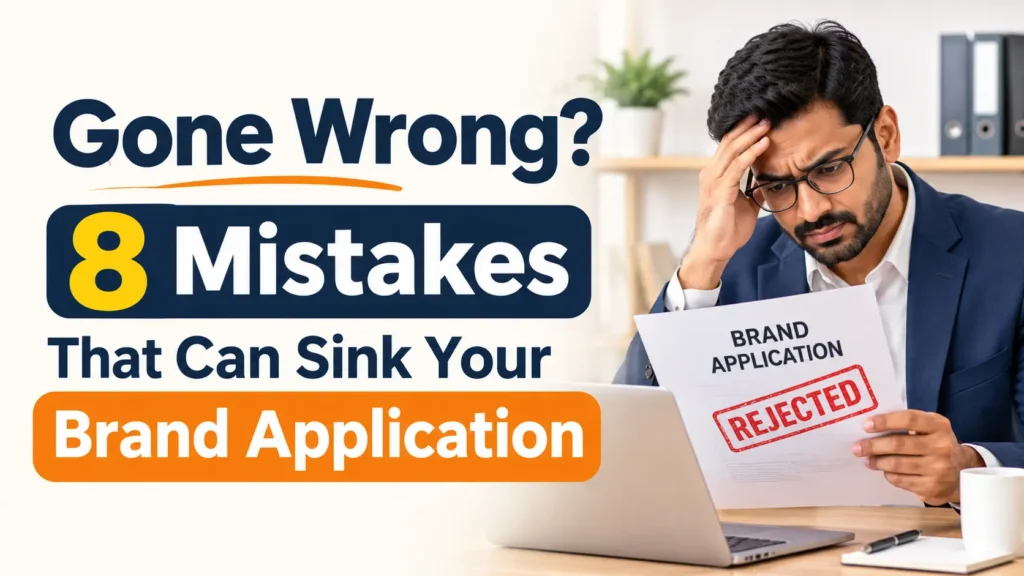
A Lucknow clothing brand spends two years building a following. Then it files for trademark registration, gets an examination report objecting to the name, and misses the 30-day reply window. The application is marked abandoned. The brand name is now exposed, and so is the filing fee.
This is not rare. Most trademark failures come from avoidable process errors, not bad brands. Here are the eight mistakes to avoid, and what to do instead.
What Is Trademark Registration and Why Does It Matter?
Trademark registration is the legal process of registering your brand name, logo, or slogan with India’s Trade Marks Registry so that you get exclusive rights over it. It is a core form of intellectual property protection. A registered mark lets you use the ® symbol and take action against copycats.
Registration is not instant. It moves through filing, examination, publication, an opposition window, and finally the certificate. Every stage has deadlines, and most mistakes happen at those deadlines.
8 Trademark Mistakes That Cost Businesses Time and Money
1. Skipping the trademark search
Many owners file first and check later. If a similar mark already exists in your class, the Registry can object on conflict grounds. A free search on the IP India public search portal takes minutes and can save months.
2. Choosing the wrong class
Fees and protection apply per class. A cloud kitchen, for example, may need more than one class to cover both food products and food services. Filing in the wrong class leaves the real part of your business unprotected.
3. Picking a descriptive or generic name
Names like “Best Tasty Foods” describe the product and are likely to draw a Section 9 objection. Invented or distinctive names are much easier to protect. This is where a brand decision becomes an intellectual property decision.
4. Filing in the wrong name
The applicant must be the true owner of the mark. Filing under an individual’s name when the business is a company, or vice versa, creates ownership problems later when you sell, franchise, or raise funds.
5. Missing the 30-day window for a trademark objection reply
If the Registry issues an examination report, you generally have 30 days to respond. A missed deadline can lead to the application being treated as abandoned. A strong trademark objection reply addresses each ground with arguments, evidence, and the right legal references. A generic or copied reply rarely succeeds.
6. Ignoring the opposition period
After acceptance, your mark is published in the Trade Marks Journal, and third parties get roughly four months to oppose. If someone does and you do not respond, you can lose the application. Track your application status regularly.
7. Using ® before registration
You can use ™ from the day you file, but ® only after registration. Using ® early can create legal trouble.
8. Forgetting trademark renewal
A registered mark lasts ten years, then needs renewal. Trademark renewal is done by filing Form TM-R. A short grace period with a surcharge exists, but a mark that is removed needs a restoration process, which costs more. Put the renewal date in your calendar the day the certificate arrives.
A trademark is only as strong as the deadlines you keep.
DIY Filing vs Professional Help: Which Is Better?
| Factor | DIY Filing | With Business Legal Services |
|---|---|---|
| Upfront cost | Government fee only | Government fee plus professional fee |
| Trademark search | Basic, often skipped | Structured, with risk review |
| Class selection | Often incomplete | Mapped to your actual business |
| Objection reply | Written without legal drafting | Drafted with arguments and evidence |
| Deadline tracking | Easy to miss | Monitored and reminded |
| Best for | Simple, distinctive marks | Competitive names, multiple classes, objections |
Government fees are per class: ₹4,500 for individuals, startups, and small enterprises, and ₹9,000 for other applicants, when filing online. Fees change, so confirm the current schedule on the official IP India website.
How Does Online Trademark Registration Work?
- Search your mark across the public database to check for similar existing marks.
- Choose your class or classes based on what you actually sell or offer.
- File Form TM-A online with applicant details, mark representation, and the class.
- Respond to the examination report within 30 days if the Registry raises objections.
- Watch the publication and opposition period, and respond if anyone opposes.
- Receive your certificate, then diarise your renewal date.
Should You Hire Help? Our Recommendation
Our view: if your brand name is distinctive and nobody else uses anything similar, you can file yourself. If your name is descriptive, your market is crowded, or you get an objection, use professional help.
Reliable business legal services do more than file a form. They check the risk before you pay, draft a proper reply when needed, and make sure you do not lose the mark to a missed date. For brand owners in Lucknow, our trademark registration service covers the full cycle. If you are also setting up your company, see our company registration guide.
A Real-Feeling Example (Anonymised, Illustrative)
Imagine a Gomti Nagar skincare startup that launched with a name made of two common words. Its application drew a descriptiveness objection. The first reply was a copied template and failed. A second, properly drafted trademark objection reply, backed by usage proof and brand history, got the mark accepted. The lesson: your reply decides the outcome, so draft it like a legal argument, not a form.
Conclusion
Most trademark failures are process failures: no search, wrong class, missed replies, and forgotten renewals. Treat trademark registration as a project with deadlines, not a one-time form. Beginquest Services Pvt. Ltd. in Gomti Nagar, Lucknow can help you file correctly, respond to objections, and protect your brand for the long term.
Verify current fees and timelines on the official IP India portal before publishing. Sources differ on some renewal figures.
Frequently Asked Questions
Official fees depend on the applicant and are charged per class. Online filing is ₹4,500 per class for individuals, startups, and small enterprises, and ₹9,000 for others. Replying to an examination report has no government fee. Professional fees are separate. Fee schedules change, so confirm the current rates before filing.
An uncontested application commonly takes around 18 to 24 months from filing to certificate, though timelines vary with Registry workload. Objections, hearings, and oppositions can extend this to several years. You can use the ™ symbol while you wait, but not ®.
You generally have 30 days from the examination report to reply. If you miss it, the application can be treated as abandoned, and you may lose the filing fee. Track the status on the Registry portal and prepare your trademark objection reply early.
No. The ® symbol is allowed only after the mark is registered. While the application is pending, use ™. Using ® before registration can be misleading and may attract legal consequences, so wait for the certificate.
A trademark is valid for ten years from the date of application and can be renewed indefinitely for further ten-year periods. Trademark renewal is filed on Form TM-R, usually in the months before expiry. A late renewal with a surcharge is possible within a grace period.
Not legally, since you can file yourself. In practice, professional help is valuable when your name is descriptive, the field is crowded, or you receive an objection. An expert reduces errors, handles deadlines, and drafts replies that address the legal grounds.