
Why Every Business Needs a Startup Consultant Before Launching
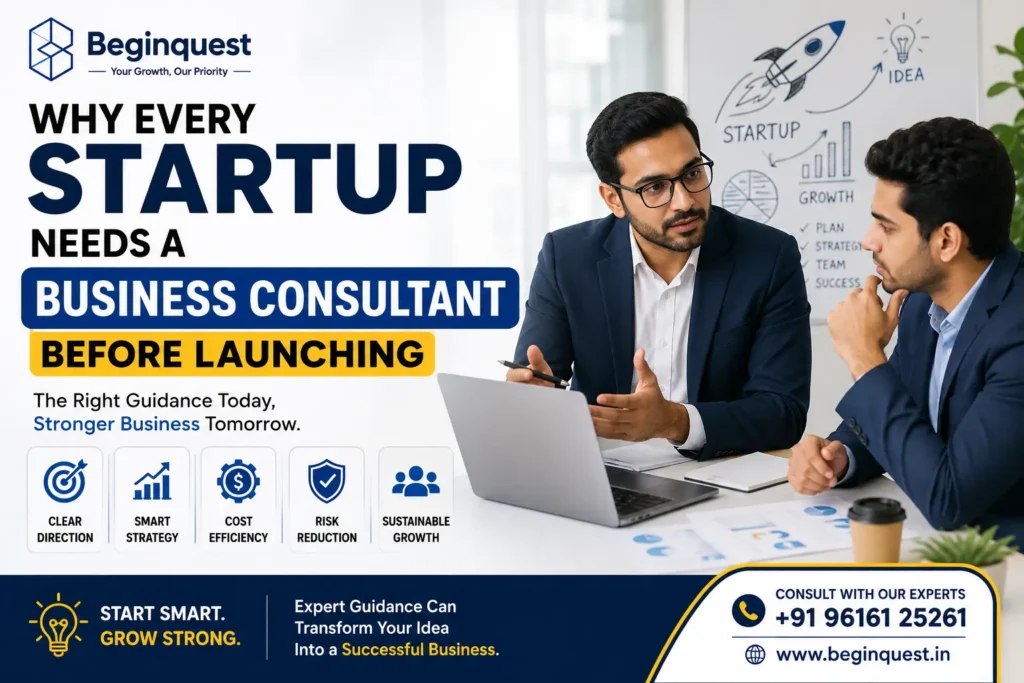
Launching a startup is exciting, but it also comes with uncertainty. From choosing the right business structure to understanding legal requirements and financial planning, many first-time founders make avoidable mistakes. Working with a startup consultant before launching helps reduce risks, improve decision-making, and create a stronger foundation for long-term growth.
Whether you’re planning a technology startup, retail business, manufacturing unit, or service-based company, expert guidance can save both time and money while increasing your chances of success.
Entrepreneurs can also explore various government support schemes through the Startup India initiative and the Ministry of MSME for startup recognition, funding opportunities, and MSME-related benefits.
What Is a Startup Consultant?
A startup consultant is a business professional who helps entrepreneurs transform an idea into a structured and legally compliant business. Instead of relying on trial and error, founders receive expert advice on planning, registrations, funding readiness, taxation, compliance, and growth strategy.
Unlike general business advice available online, consultants provide personalized recommendations based on your business model, industry, location, and future goals.
Many startups also work with a startup business consultant during their first year to build scalable processes and avoid common operational challenges.
Why Do Startups Need Professional Guidance?
Starting a business involves much more than registering a company.
Founders often need to make important decisions such as:
- Choosing the right business entity
- Preparing a business roadmap
- Understanding tax obligations
- Managing registrations and compliance
- Creating realistic financial projections
- Identifying growth opportunities
Without professional support, these decisions can lead to expensive corrections later.
A qualified business setup consultant helps simplify these complex processes while allowing entrepreneurs to focus on developing their products and serving customers.
Benefits of Hiring a Startup Consultant
1. Better Business Planning
Every successful startup begins with a clear strategy.
A consultant helps define:
- Business objectives
- Revenue model
- Target customers
- Competitive positioning
- Growth milestones
This structured planning reduces uncertainty before launch.
2. Correct Business Registration
Selecting the wrong legal structure may affect taxation, funding opportunities, and compliance.
A business setup consultant helps determine whether your business should be registered as:
- Proprietorship
- Partnership
- LLP
- Private Limited Company
- One Person Company
The right structure depends on your goals, investment, and expansion plans.
3. Financial Planning
Cash flow problems are among the biggest reasons startups fail.
Professional business advisory services help founders prepare:
- Startup budgets
- Cost estimates
- Pricing strategy
- Profit forecasts
- Break-even analysis
These insights improve financial decision-making before launch.
4. Compliance Made Easy
Many founders underestimate compliance requirements.
Depending on your industry, you may require:
- GST Registration
- MSME Registration
- FSSAI License
- Shop & Establishment Registration
- Trademark Registration
- Professional Tax
- Import Export Code
A startup consultant ensures that all required registrations are completed correctly and on time.
5. Reduced Business Risks
Professional consultants identify potential issues before they become expensive problems.
They help evaluate:
- Legal risks
- Financial risks
- Market competition
- Licensing requirements
- Operational bottlenecks
Preventive planning often saves significantly more money than fixing mistakes later.
How Does a Startup Consultant Work?
Although every business is different, the consulting process usually follows these steps.
Step 1: Understanding the Business Idea
The consultant evaluates:
- Industry
- Products or services
- Business goals
- Budget
- Target customers
Step 2: Market Assessment
Research includes:
- Competitor analysis
- Customer demand
- Pricing trends
- Growth opportunities
This helps validate whether the idea is commercially viable.
Step 3: Business Structure Selection
The consultant recommends the most suitable legal structure based on taxation, ownership, compliance, and future investment requirements.
Step 4: Registrations & Documentation
Necessary registrations are completed efficiently while ensuring documentation accuracy.
Step 5: Launch Roadmap
The startup receives guidance on:
- Business operations
- Marketing strategy
- Compliance calendar
- Financial management
- Scaling opportunities
Key Business Advisory Services for Startups
Professional consultants generally provide multiple services instead of only company registration.
These include:
Business Planning
Creating structured launch plans and growth strategies.
Company Registration
Helping founders choose and register the appropriate business entity.
GST Registration
Ensuring tax compliance from the beginning.
MSME Registration
Helping eligible businesses access government schemes and benefits.
Trademark Registration
Protecting business identity and intellectual property.
Compliance Management
Monitoring statutory filings and regulatory requirements.
Financial Advisory
Supporting budgeting, taxation, and business planning.
Many founders continue working with a small business consultant even after launch to improve operational efficiency and profitability.
Common Mistakes Startups Make Without Professional Help
Many businesses fail not because the idea is bad, but because execution lacks planning.
Some common mistakes include:
- Choosing the wrong legal entity
- Ignoring compliance deadlines
- Mixing personal and business finances
- Poor budgeting
- Weak market research
- No customer validation
- Underestimating operational costs
- Delaying trademark registration
- Incorrect tax planning
Working with a startup consultant significantly reduces these risks.
Startup Consultant vs DIY Business Setup
| DIY Approach | Professional Consultant |
|---|
| Trial and error | Structured planning |
| Higher compliance risk | Regulatory guidance |
| Time-consuming | Faster execution |
| Limited expertise | Industry knowledge |
| Greater possibility of mistakes | Reduced business risk |
| Difficult documentation | Professional documentation support |
Why Choose Professional Business Consulting?
Professional consulting provides more than registrations.
It offers strategic guidance throughout the business journey.
An experienced startup business consultant understands:
- Industry regulations
- Market challenges
- Financial planning
- Business expansion
- Compliance management
Instead of reacting to problems later, founders can prepare in advance.
Businesses working with experienced consultants often launch with greater confidence because they understand both opportunities and responsibilities.
Conclusion
Launching a startup requires much more than enthusiasm and a good idea. Proper planning, legal compliance, financial management, and strategic execution all contribute to long-term success.
Working with a startup consultant before launching gives entrepreneurs the confidence to make informed decisions, avoid common mistakes, and build a business on a strong foundation. Whether you need help with registrations, compliance, planning, or growth strategy, professional guidance can save valuable time and resources while increasing your chances of sustainable success.
Frequently Asked Questions
Yes. A consultant helps avoid costly mistakes, simplifies legal compliance, improves planning, and provides structured guidance before launching the business.
A startup consultant assists with business planning, registrations, compliance, financial strategy, documentation, and growth planning based on the startup’s requirements.
The ideal time is before registering your business. Early planning helps founders make better legal, financial, and operational decisions.
Yes. Many consultants assist with GST Registration, MSME Registration, Company Registration, Trademark Registration, FSSAI licensing, and other compliance requirements.
Absolutely. A small business consultant supports entrepreneurs in improving efficiency, reducing risks, and creating sustainable growth strategies.
Yes. Many startups continue using business advisory services for compliance, taxation, expansion planning, funding readiness, and operational improvements.